Guides
What Is Crypto Mining? How It Actually Works, Explained Simply
Crypto mining explained in plain English: what miners do, proof-of-work vs proof-of-stake, why it uses so much energy, and how to spot mining scams.
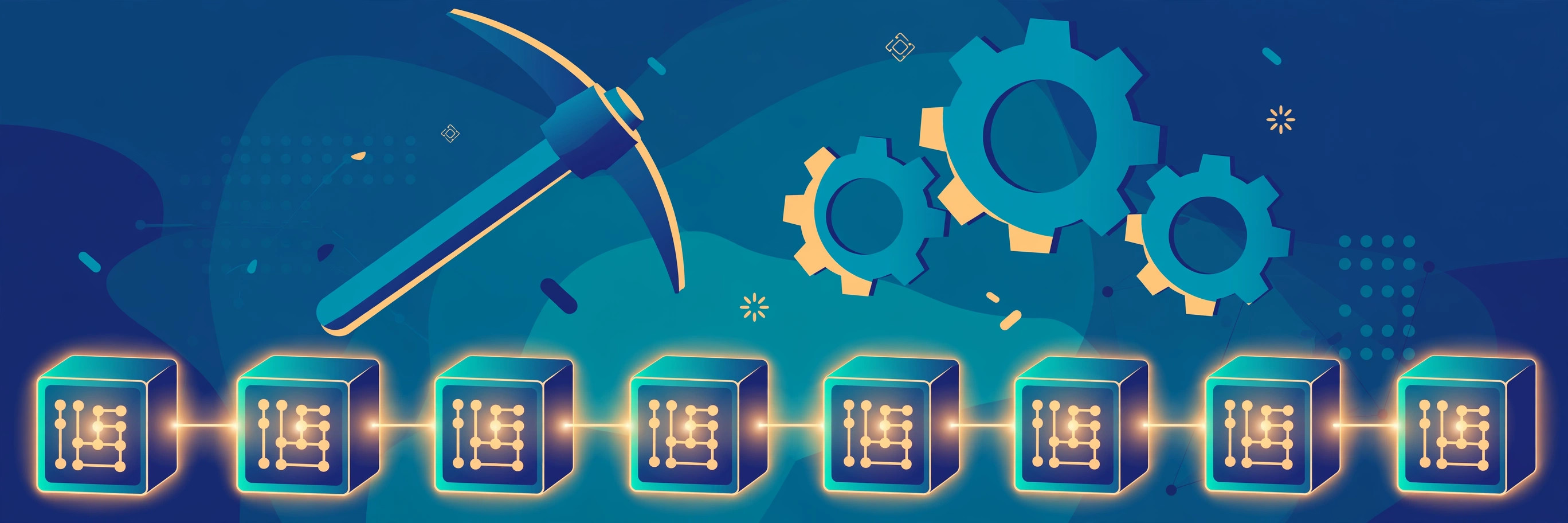
Crypto mining is the process that keeps certain cryptocurrencies running. Despite the name, nobody digs anything out of the ground — mining is really just computers checking that transactions are legitimate, bundling them into blocks, and securing the network against cheaters. The computers that do this work get paid in new cryptocurrency.
The most famous mined cryptocurrency is Bitcoin, which has used mining since 2009. To understand it, you need to know what miners actually do, why the process uses so much electricity, and how miners earn their rewards. This guide explains all of it in plain English — no hype, no financial advice.
What miners actually do
Bitcoin is a shared digital ledger, called a blockchain, kept in sync by thousands of computers. When someone sends bitcoin, that transaction is broadcast to the network, and somebody has to verify it — that the sender actually owns the bitcoin and isn't spending the same coins twice.
That is the miner's real job. Mining computers gather a batch of recent transactions, verify each one, and compete to add that batch (a block) to the blockchain. To win, they must solve an extremely difficult computational puzzle — not by cleverness, but by guessing: each machine runs trillions of guesses per second trying to find a specific number. The first machine to find it wins.
This guessing game is called proof-of-work. It slows block creation to a predictable pace — about one block every ten minutes on Bitcoin — and it makes cheating expensive: rewriting history would mean redoing all that costly computation, which is why Bitcoin has never suffered a successful large-scale attack.
If you want the full picture of the ledger miners protect, see Bitcoin and Blockchain Explained Simply for Beginners.
Proof-of-work vs proof-of-stake
Mining as described above is one way to run a blockchain, but not the only way. The two main systems are proof-of-work and proof-of-stake, and the difference matters.
Proof-of-work (PoW): Participants (miners) spend electricity and specialized hardware competing in the guessing game. The winner adds the next block and earns the reward. Bitcoin, Litecoin, and Dogecoin work this way. Its strength is security built on real, physical cost: attacking the network means paying for enormous energy and equipment.
Proof-of-stake (PoS): Instead of burning electricity, participants lock up some of their own cryptocurrency as a deposit (a stake) to qualify as a validator. The network randomly selects validators to add new blocks, and cheaters can lose their deposit (a penalty called slashing). Ethereum switched from proof-of-work to proof-of-stake in 2022, cutting its energy use by roughly 99.95%.
| Feature | Proof-of-work | Proof-of-stake |
|---|---|---|
| Block creators called | Miners | Validators |
| What they spend | Electricity and hardware | Locked-up cryptocurrency |
| Energy use | Very high | Very low |
| Security from | The cost of the work itself | The risk of losing the stake |
| Biggest examples | Bitcoin, Litecoin, Dogecoin | Ethereum, Solana, Cardano |
Neither system is perfect. Proof-of-work's energy use is its headline weakness; proof-of-stake favors those who already hold the most coins. Key point: mining specifically means proof-of-work. Proof-of-stake networks don't have miners at all.
Why mining uses so much energy
The energy consumption is not a side effect of mining — it is the security mechanism. The guessing game automatically gets harder as more machines join, so a block is found roughly every ten minutes, and the sheer cost of all that computation is what makes attacking the network impractical.
How much energy? Estimates vary by method, so treat any single number as approximate. The International Energy Agency (IEA), in its January 2024 Electricity report, estimated that cryptocurrency mining consumed about 110 terawatt-hours (TWh) of electricity in 2022 — roughly 0.4% of global electricity use, comparable to a mid-sized country's consumption, with a projection of around 160 TWh by 2026. Other trackers put Bitcoin's usage higher: the Cambridge Centre for Alternative Finance has estimated roughly 138 TWh per year, and some live indexes show even more — the spread reflects genuinely different measurement methods.
Two nuances matter. The energy mix matters as much as the total: miners chase cheap electricity, which has increasingly included renewables in places like Iceland and parts of the US. And the emissions picture is debated because data is patchy. The honest summary: mining uses a lot of energy, exact figures depend on who's measuring, and the criticism is legitimate even though the energy use is structural, not accidental.
How miners get paid
Miners earn from two sources, both going to whoever wins the guessing game for each block.
1. The block subsidy (new coins). The network issues brand-new bitcoin to the winning miner — the only way new bitcoin is ever created. Since the April 2024 halving, the subsidy has been 3.125 BTC per block. Halvings happen roughly every four years: the reward started at 50 BTC in 2009, then 25, 12.5, 6.25, and now 3.125. The next halving is expected around 2028, and total supply is capped at 21 million coins.
2. Transaction fees. Users pay small fees to get transactions confirmed faster, and those fees go to the miner who includes them in a block. Right now fees are a small fraction of a miner's income — well under 1% in normal times — but they are designed to become the miners' main income decades from now as the subsidy keeps shrinking toward zero.
With about 144 blocks mined per day, each block winner currently collects 3.125 new BTC plus that block's fees. Whether that income covers the electricity and hardware is a different question.
Is mining still worth it?
Education, not advice. Nothing here is a recommendation to mine, invest, or buy anything.
Mining is a business with revenue and costs. Revenue comes from the block reward and fees, denominated in cryptocurrency — so its value swings with the market. Costs are dominated by electricity and hardware: modern mining uses specialized ASIC chips built for one purpose — solving the puzzle as fast as possible per watt. A home computer or gaming GPU cannot compete. Mining today is an industrial-scale operation: warehouses of ASICs where power is cheapest.
The 2024 halving made the math tougher: every miner's revenue per block was cut in half overnight while electricity bills stayed the same. Industry analysis in 2026 suggested current-generation machines need power at roughly $0.088 per kWh or cheaper to break even, with older machines needing far cheaper power. Miners with the cheapest power and newest machines survive; the rest shut down.
The honest summary: Bitcoin mining is a highly competitive, low-margin industry where electricity cost decides almost everything. The days when a home computer could mine profitably are long gone.
Mining pools: how most mining actually happens
Since one machine has almost no chance of winning a block alone, most miners join mining pools: groups that combine computing power and split rewards in proportion to each miner's contribution. Pools turn mining from a lottery into a steadier stream of small payouts, taking a small fee for coordinating. In practice, a handful of large pools control most of the network's computing power — so mining is more centralized in practice than the decentralized ideal suggests.
Watch out: cloud-mining scams
Most "cloud mining" offers advertised to the public are scams or fail to deliver. Cloud mining means renting mining power from a company instead of owning hardware. The model is structurally irresistible to fraudsters: payments are irreversible, the technology is opaque to outsiders, and the target audience dreams of passive income.
The Federal Trade Commission (FTC) and consumer-protection experts flag the same red flags repeatedly. Walk away if you see any of these:
- Guaranteed or fixed daily returns. Real mining faces difficulty changes, hardware failures, and fee variance. No legitimate operator can promise fixed profits.
- Anonymous teams or unverifiable addresses. Legitimate operators disclose their company, directors, and jurisdiction. Scams use stock photos and invented locations.
- No verifiable proof of mining. A real operator can show pool addresses and actual payout transactions on the blockchain. Scammers change the subject.
- Referral-heavy marketing. If the pitch emphasizes recruiting friends more than mining economics, the business model is the recruiting — a Ponzi pattern.
- Crypto-only payments. Irreversible payments mean no chargebacks. Legitimate firms usually accept cards or bank transfers too.
- "Unlock" or "tax" fees to withdraw. A platform demanding extra payment before releasing your funds is the scam — you'll never see either payment again.
If you've been targeted or already sent money: stop all contact, never send an "unlock" payment, save every screenshot and transaction record, and report it to the FTC and the FBI's Internet Crime Complaint Center (IC3). Related AI-flavored traps are rising too — see Can AI Predict Crypto Prices? The Honest Answer and AI Trading Bots Explained: Do They Actually Work? before trusting any "AI-powered" crypto promise.
Frequently asked questions
Can I mine Bitcoin on my phone or laptop?
Technically yes, practically no. A phone or laptop would spend far more on power than it could ever earn and would wear itself out trying. Mining smaller proof-of-work coins on a good GPU is slightly more realistic, but rarely worth it once electricity is counted.
Is crypto mining legal?
In most countries, including the US, yes — but rules vary widely and keep changing. Some jurisdictions have banned it outright, and others tax it or require licenses. This isn't legal advice; check your local rules before doing anything.
How is AI changing crypto mining?
Machine learning works around the edges: optimizing cooling and energy use in mining facilities, predicting hardware failures, and timing operations for cheap-electricity windows. No AI can shortcut the guessing puzzle itself. We cover this in AI and Crypto Mining: How Machine Learning Is Changing Mining, with the broader picture in AI and Crypto: What AI Can (and Can't) Do for Crypto Beginners.
Do I need to understand mining to use crypto?
No. You can buy, hold, and send cryptocurrency without knowing anything about mining — just as you can use the internet without understanding undersea cables. Mining matters if you're curious about how the system stays secure. For researching assets as a buyer, see How to Use AI for Stock Market Research (Without Getting Burned).
The bottom line
Crypto mining is the engine room of proof-of-work blockchains: specialized computers compete to verify transactions and secure the network, and the winner gets paid in new coins plus fees. The heavy energy use is the security mechanism working as designed — though it remains the most legitimate criticism of proof-of-work. For most people, mining is something to understand, not something to do. And the key takeaway: anyone promising guaranteed mining returns from your couch is almost certainly selling a scam. This article is for education only — not financial advice.